

In his book, “Identity: Youth and Crisis” (1968), Erik Erikson—Psychologist and developer of psychosocial stages—argued that without a moral anchor like Christianity, civilized society risks collapse.
Why did he say this?
To understand Erik Erikson’s position, it is important to first understand the concept of ‘self’ and ‘society’. To explain these two intertwined ideas, I introduce another contributor to the field of psychology and sociology — Abraham Maslow.
Abraham Maslow was an American psychologist best known for founding humanistic psychology and proposing the hierarchy of needs theory describing human motivation.
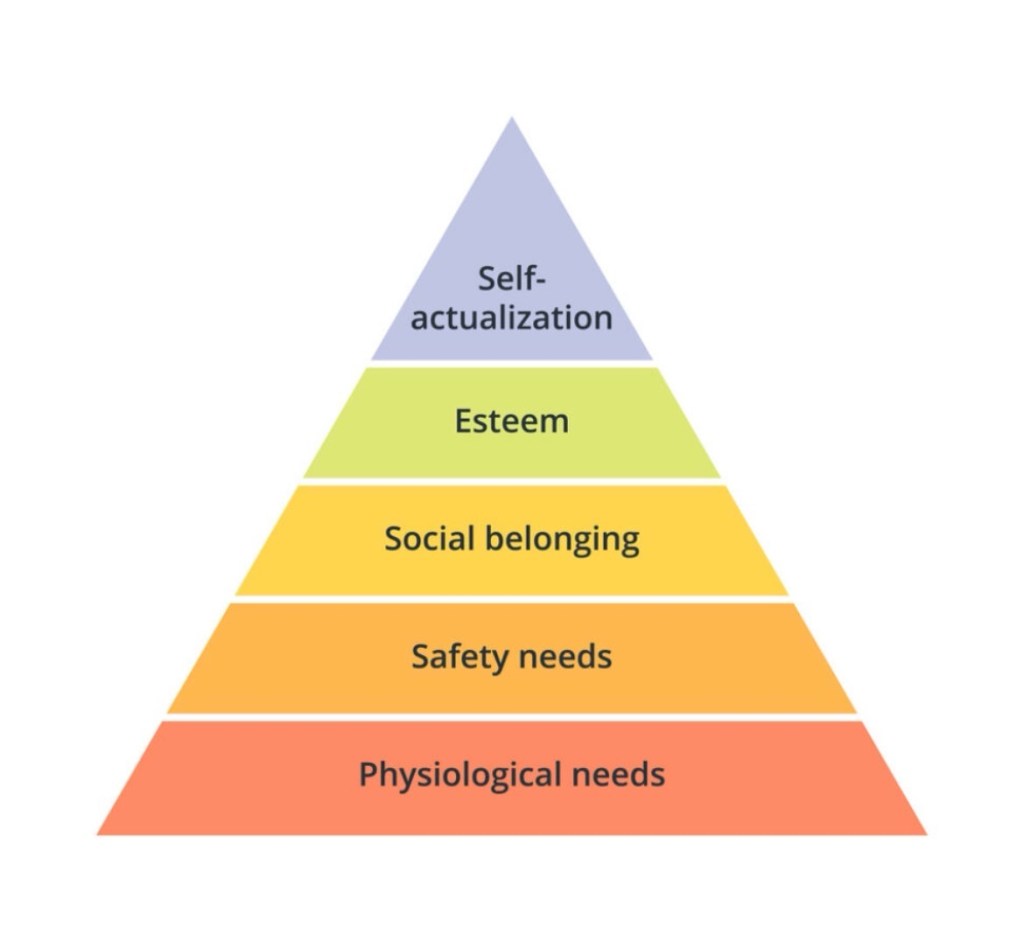
Maslow posited that human success is dependent on basic needs acquisition. His ‘Needs Pyramid’ theory looks like this:
However, when I apply Erik Erickson’s observation, the ‘Needs Pyramid’ looks like this:
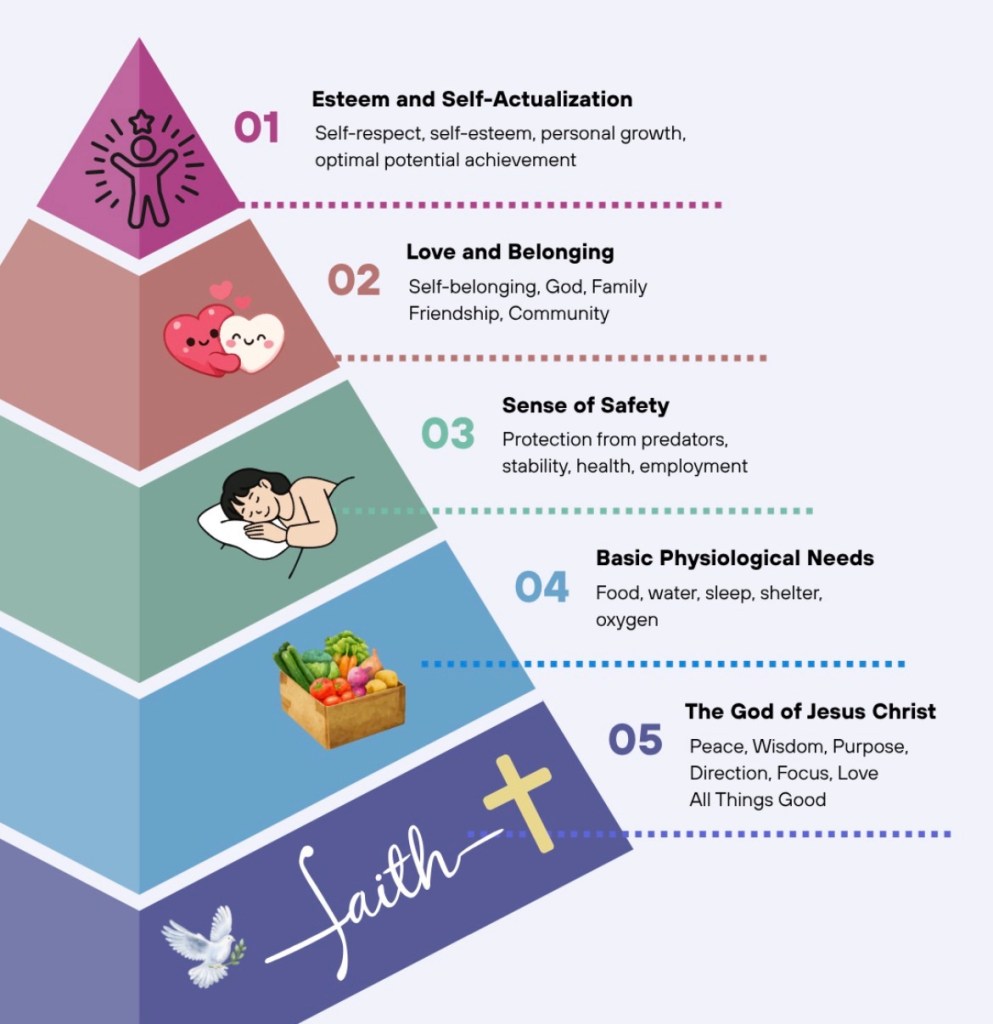
I agree with Erik Erikson for 12 reasons.
- God is the anchor for identity and purpose: When God is placed first, life gains an enduring center—values, meaning, and direction that don’t shift with circumstances. This provides stability for decisions, relationships, and priorities.
- God created our moral and spiritual framework: God’s commands and character supply objective moral guidance that shape habits and character; those formed habits sustain life under pressure and prevent collapse when trials come.
- God is our source of hope and resilience: Trust in God grounds hope beyond temporary success or failure, enabling perseverance and peace amid setbacks.
- God is the originator of dignity: Belief that God created people affirms inherent worth and purpose—every life is made intentionally, not accidental.
- God designed us and He knows what we need: Seeing humans as created implies moral and relational designs (e.g., for community, stewardship, worship) that inform how people flourish.
- God wants us to trust Him: Being made by God invites dependence on Him, gratitude, and obedience, which orients life toward holistic health rather than an autonomy that leads to fragmentation.
- God provides a prescription for our success: Scriptural teachings (love, justice, humility, diligence, generosity, forgiveness) function as practical prescriptions that build strong families, communities, and character.
- God is the essence of Wisdom: Putting God first (seeking His will and guidance) reframes goals so success is measured by faithfulness and loving service rather than only wealth, status, or comfort.
- Since the beginning, God has offered His protection to those who choose Him : Through Prayer, Scripture, and spiritual intimacy, God provides guidance, strength, and wisdom to those who choose Him first.
Without God, humans can build, but what they build will not last.
“Therefore everyone who hears these words of mine and puts them into practice is like a wise man who built his house on the rock. 25 The rain came down, the streams rose, and the winds blew and beat against that house; yet it did not fall, because it had its foundation on the rock. 26 But everyone who hears these words of mine and does not put them into practice is like a foolish man who built his house on sand. 27 The rain came down, the streams rose, and the winds blew and beat against that house, and it fell with a great crash.” (Matthew 7:24-27)
Jesus Christ is telling us that a foundation based solely on wealth, fame, pleasure, or self will eventually fail—values and fortunes change, leaving instability. Without God, success is hollow. Without God, when trials strip away temporal supports, then meaning and resilience collapse. The emptiness we feel, the reason so many people chase addiction is because God created a void in our soul that only He can fill. If we equate this truth to the idea of a puzzle, then we, as humans, are like a puzzle with a missing piece and God is that missing piece. We are incomplete without God.
Erik Erikson knew this truth. Societies and people who ignore God’s design will erode trust, virtue, and community, leading to brokenness that undermines long-term flourishing.
If you want to build a solid foundation on the bedrock of Jesus Christ, then the following are practical steps to take:
- Center daily life on God (especially on the teachings of Jesus Christ): regular prayer/conversation with God, Scripture reading, and worship to align decisions and priorities with God’s will.
- Build character, not just comfort: cultivate humility, honesty, diligence, and love in work and relationships by applying God’s prescription for success to your life.
- Measure success using God’s Biblical ruler: value faithfulness, service, and spiritual growth alongside material achievements.
- Invest in community: cultivate relationships through Christ-focused church members, family, and faithful friends to sustain and correct you.
Placing God as the foundation doesn’t remove life challenges, but faithfulness to God provides a lasting anchor, moral clarity, and the means to build a life that endures rather than crumbles, because God promises to be faithful to those who are faithful to Him.
Even the smartest, most successful, most powerful human is weak compared to God’s strength. God created us. No one is greater than God.
The only path to true wisdom and peace is the path that leads to unification with God.
The Path to God
- Romans 3:23 — All have sinned and fall short of the glory of God.
- Romans 6:23 — The payment for sin is death, but the gift of God is eternal life through Christ Jesus, our Lord and Savior.
- Romans 5:8 — Christ died for us while we were sinners.
- Romans 10: 9-10 — Confess and believe that Jesus Christ is the Son of God and that Christ is the path to God (to receive salvation through Jesus Christ).
- Romans 10:13 — Everyone who calls on the name of the Lord will be saved.
- Romans 8:1 — There is now no condemnation for those in Christ Jesus.
“For God, so loved the world that He gave His only begotten son that whosoever believes in Him will not perish, but have everlasting life.” – John 3:16



 New Zen Vigor
Leave a comment